mood
mood 14
7:00pm | Saturday, September 19
Screening
Regina Public Library Film Theatre, 2311 12th Avenue – Lower Level
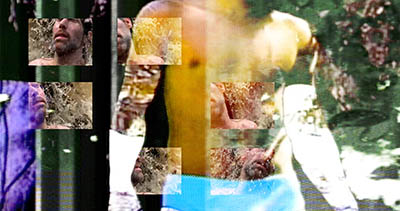
Ωmega One: of direct(((ive)))s
Benjamin Rosenthal, 10:00 min
Ωmega One: of direct(((ive)))s, once removed emerges from intersection of gay tourist “thirst traps” shot in Chapada Diamintina (Igatu, Bahia, Brazil), Grindr longings, and Star Trek Voyager to examine histories of colonialism and desire. Recasting the politically and historically charged landscape of Chapada Diamintina as a “set” for occidental self-exploration, the project leans into the double-bind, and problematic power dynamics of locating and engaging narratives of queerness in spaces in which one may not belong.
Mature subject matter.
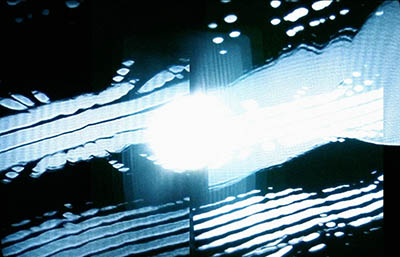
Never Not Nothing
Tasman Richardson, 6:00 min
This audiovisual performance transforms video feedback into both sight and sound through an analog-digital feedback loop. Using a vintage camcorder aimed at a CRT television, the artist generates evolving feedback patterns. The video signal is simultaneously diverted to audio inputs—visual information literally becomes sound through signal misappropriation. Real-time manipulation of the TV's contrast and brightness controls shapes the feedback's behavior, causing it to pulse, sharpen, and morph organically. These experimental sessions are sampled and cut into clips that function as audiovisual instruments, triggered via MIDI through Ableton Live and composited in real-time with Resolume Arena. Never Not Nothing explores how feedback emerges from amplifying insignificant noise—tiny unpredictable seeds that compound through iterative self-reflection. Optical errors mutate the signal, transforming microscopic imperfections into cascading phenomena. The piece illustrates emergence and recursion, where nothing truly empty exists; even the smallest fluctuation, when fed back upon itself, blooms into rich media.
This film is appropriate for all audiences and ages.
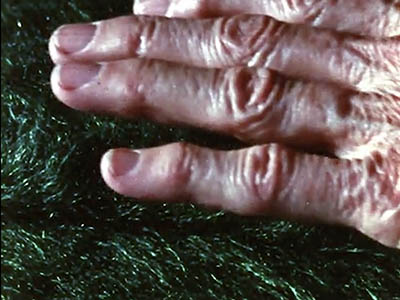
GLINT
Anne Golden, 3:55 min
Glint is an exploration of fleeting moments and fractured realities. Through a collage of transient visuals and disjointed sounds, the video tries to capture the elusive shimmer of memory.
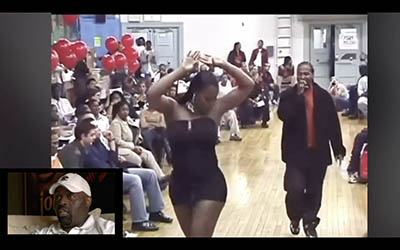
what if we kept it between us?
Mahlet Cuff, 5:00 min
Using the concept of gatekeeping as a method for Black Queer music and dance preservation. what if we kept it between us? Is a single channel film that draws from archival footage of ballroom, voguing, juke, footwerk, dancehall and dance practices across the African and Black Queer diaspora. While drawing from House music godfather Frankie Knuckles who oftentimes was asked what is house music, the question is proposed to the audience, questioning why there is desire to explain the genre at all. Using music from electronic duo Drexciya, what if we kept it between us? is working towards recentering genres of Black music that have been appropriated. Pushing against extraction and offering gatekeeping as a way to protect and preserve Black music and dance ethnographies.
This film is appropriate for all audiences and ages.
Heart Shaped
Grace Mitchell, Sofia Theodore-Pierce, 13:00 min
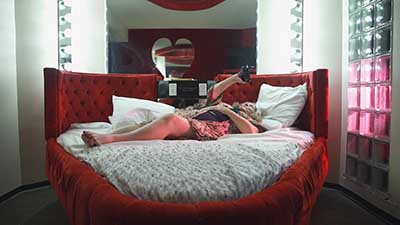
Heart Shaped examines the transient lives of seven guests staying at a themed hotel in Wisconsin. Self and strangers overlap through shared spaces and improvisational choreography. Letters between the two filmmakers explore blurred identity, long distance intimacy, and the erotics of collaboration. "One hand on the clit, the other on the mind.”
Mature subject matter - discussions of sexual acts and scenarios.
you can't get what you want but you can get me
Samira Elagoz & Z Walsh, 13:00 min
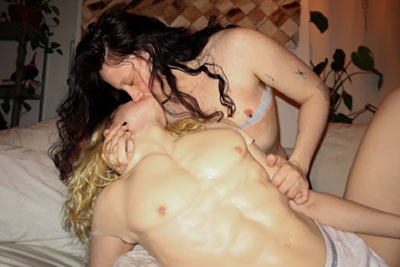
A unique slideshow documenting two long-haired trans men falling madly in love. Over the course of one year, the artist couple Samira Elagoz & Z Walsh gathered photographs from reallife events such as their first kiss, meeting each other's parents, long-distance thirst traps, a beach wedding, and top surgery and its subsequent recovery. A sweet and steamy celebration of T4T love with life and art all tangled up.
Mature language and subject matter. Post surgical images containing blood and bodily fluids.
Slapstick
Nelson Hendricks, 11:15 min
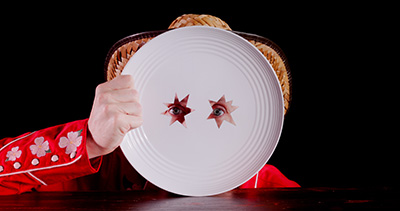
Inspired by slapstick comedy, I explore the thin line between humour and violence. Quoting the films of Charlie Chaplin, Fassbinder, and Derek Jarman, the video features two dancers reinterpret a series of short scenes. The work questions traditional masculinity and the power structures that exclude or harm marginalized people.
This film is appropriate for all audiences and ages.